Managing Fatty Liver: Simple Steps for a Healthier You
By : Dr. Khyati Chauhan • 18 Mar,2025
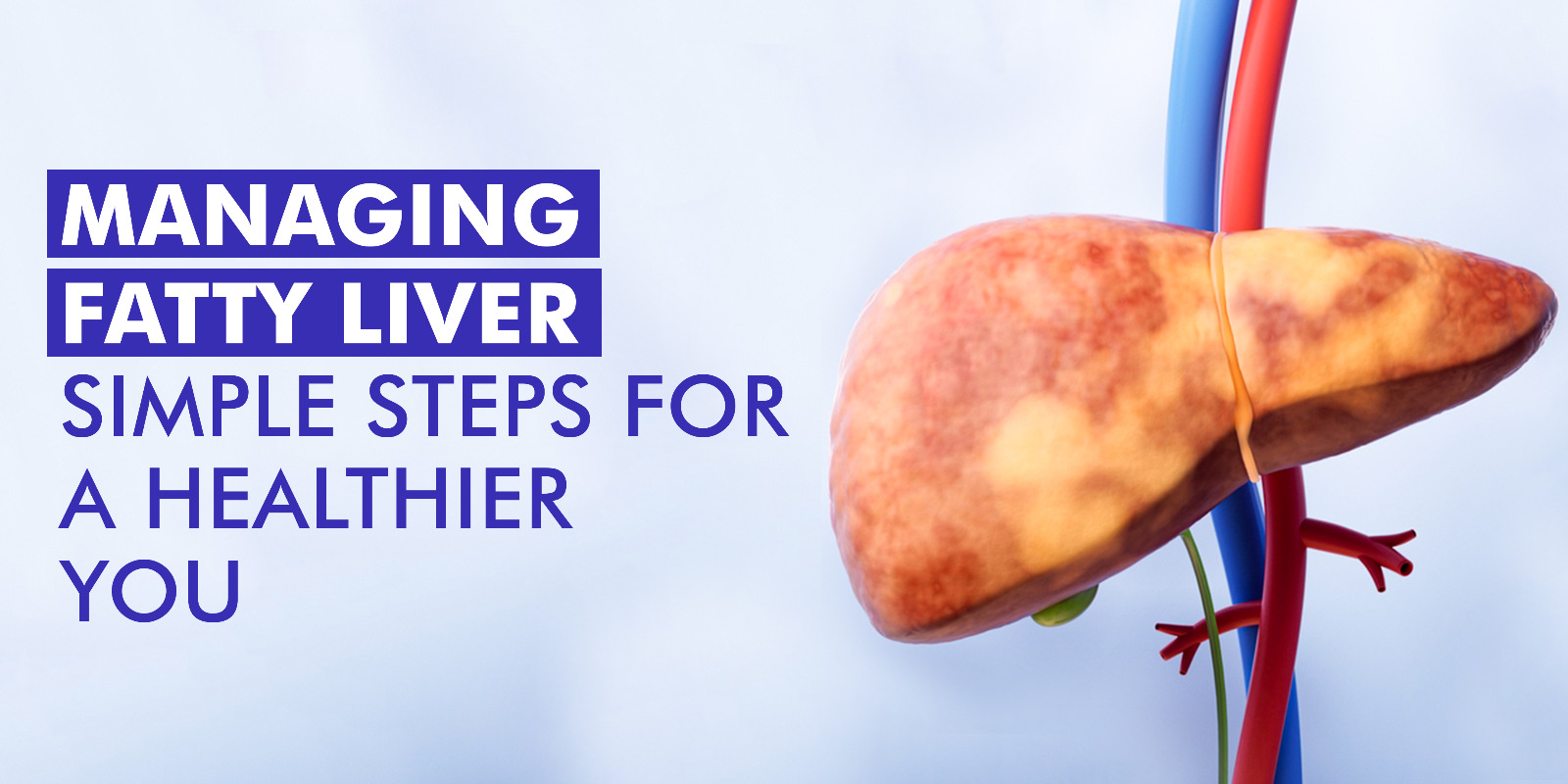
A blight that silently infiltrates the lives of millions, affecting nearly one in three adults and posing a significant risk to liver health and over wellbeing. This is the fatty liver disease. As prevalence of obesity and sedentary lifestyles rises, it’s time to shine a light on this hidden threat and explore its implications for our health.Fatty liver disease also known as hepatic steatosis, characterized by the excessive accumulation of fat in liver cells, more than 5-10% of the liver's weight.Grading Fatty Liver on the percentage of fat accumulation:Mild– Grade 1- 5%-33% fat retention.Moderate- Grade 2- 34%-66% fat retention.Severe- Grade 3- More than 66% fat retention.The progression of fatty liver disease is fueled by several interconnected processes:Raised influx of free fatty acids into the liver.Decreased fat oxidation which limits the breaking down of fatty acids.When the liver is unable to export triglycerides effectively, fat builds up within liver cells.TYPES OF FATTY LIVER DISEASE:Non-Alcoholic Fatty Liver Disease (NAFLD):(Metabolic dysfunction-associated steatotic liver disease -MASLD), it occurs in individuals who consume little to no alcohol, primarily associated with obesity, insulin resistance, and metabolic syndrome.Subtypes:Simple Fatty Liver (Steatosis): Accumulation of fat without inflammation or hepatic damage. This is mostly benign and often asymptomatic.Non-Alcoholic Steatohepatitis (NASH): A more severe form where fat accumulation is accompanied by inflammation and liver cell damage. NASH can progress to fibrosis and cirrhosis.Alcohol-Related Fatty Liver Disease (AFLD): This type arises from excessive alcohol consumption over time. It can progress through stages from simple fatty liver to alcoholic hepatitis and ultimately to alcoholic cirrhosis if alcohol intake continues.RISK FACTORS FOR DEVELOPING FATTY LIVER DISEASE INCLUDE:Obesity (particularly abdominal obesity).Diabetes mellitus type 2 (Insulin resistance).Elevated cholesterol and triglycerides levels.Unrestrained Alcohol Consumption: as ≥40g/day for men and ≥20g/day for women.Sedentary lifestyle.Certain medications, pregnancy complications, hypothyroidism, PCOS (polycystic ovarian syndrome) and genetic predispositions.SYMPTOMSMany individuals with fatty liver disease are asymptomatic, particularly in early stages. When symptoms do occur, they may include:FatigueUnease or aching in the upper right side of the abdomenUnexplained weight lossDark urine or pale stoolsYellowing of skin and eyes (icterus) in advanced casesDIAGNOSISTypically involves:Medical History and Physical assessment.Liver function tests to assess enzyme levels indicative of liver damage.Ultrasound, CT scans, or MRI that can visualize fat accumulation in the liver.Liver Biopsy- for monitoring the degree of inflammation and fibrosis.Lifestyle adjustments remain a cornerstone of fatty liver disease management alongside medications.· Weight loss improves liver function and slows fibrosis progression.· Diet low in saturated fats, added sugars, and refined carbs with healthy fats & lean proteins supports liver health.· Regular exercise reduces liver fat.· Controlling diabetes, high blood pressure, and high cholesterol lowers fatty liver risk.· Avoid alcohol completely in alcoholic fatty liver disease to prevent further damage.Homoeopathy offers a holistic approach aimed at addressing the root causes of the condition. It emphasizes individualized treatment, taking into account the unique symptoms and overall health of each patient.The homoeopathic medicines in fatty liver disease with different approaches like:1. Chelidonium MajusFullness or pain in the right upper abdomenConstipation and nausea, often with a yellowish coating on the tongueSymptoms worsen in morning.Helps in liver detoxification2. Lycopodium ClavatumDigestive issues and sluggish metabolism like bloating after meals, constipation, and a fullness in the abdomenAscites due to hepatic diseasesFeels better with warmthLiver enlargement and fat deposits.3. Carduus Marianus:HepatoprotectiveDull, aching & soreness in the right upper abdomen, with or without a feeling of fullness.Swelling and yellowing of the skin and eyes.4. Nux Vomica:Helps in digestive disturbances, related to overeating, indigestion, or alcohol consumption and improves liver function.CONCLUSION:Integrating homoeopathy with conventional care under the guidance of a doctor can provide a holistic approach in managing fatty liver disease and promoting overall health.BIBLIOGRAPHY:https://www.healthdirect.gov.au/fatty-liverhttps://www.healthline.com/health/fatty-liverhttps://emedicine.medscape.com/article/175472-overviewH.M.M.books